By Dana Yarbrough
As we kick off National Caregivers Month, I thought I’d share a blog entry my father wrote four years ago about his experience as a caregiver for my mother, affectionately known as Moosie, who has lived now with Alzheimer’s Disease for about 14 years.
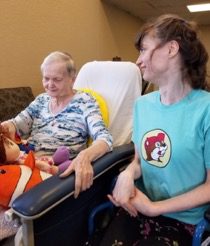

Supporting my parents, particularly my dad, has been hard because they are independent people who keep their emotions under wraps, because they live 12 hours away, and because each visit to them is painful – no one wants to see their parents age, and in the case of my mother, see her forget who I am.
By Ken Davis
The wife of a resident and I were having a conversation as we sat in the nursing home solarium, she in a chair beside her husband’s wheelchair and I beside Moosie on a couch as they both napped. She was telling me about the time the doctor broke the news that her husband had dementia – most likely Alzheimer’s. He told her she was going to have a long goodbye. Using “a long goodbye” for what lay ahead struck me as a perfect metaphor. In three words it described what happens to both caregiver and the one being cared for though each has a different experience in the process.
For Moosie it was a gradual decline in what has now been over ten years. At first it was asking the same question over and over which progressed to not remembering the names of neighbors and later believing someone had come into the house and stolen her underwear. (Picture this: we were in the lingerie department of a mall department store shopping for bras when she told the salesperson a man had come into her bedroom and stolen her underwear. I was having my first experience buying unmentionables.)
The day she returned from the grocery store in tears because she had to leave the groceries when she couldn’t remember the debit card access number was a major event for both of us. I knew she had to be evaluated for memory loss and should not be on her own or driving. Beyond embarrassment and frustration, she didn’t understand the significance of what happened. That event set the pattern for the rest of our lives.
Little by little, she lost the memory of everyone she knew along with all the experiences that defined her life including being a wife, mother, grandmother and talented career woman. Whatever she is experiencing in her mind at this time keeps her content and she often smiles or rolls her eyes in an expression that seems to say, “Can you believe that”?


The long goodbye of Alzheimer’s differs for each person. As she approaches her third anniversary in a nursing home I wonder how much longer she will maintain her current status. I hope to be there for the final goodbye when it happens no matter how long it takes.
Caregivers frequently get so caught up in daily caregiving that they neglect the need to make legal and financial decisions until they are blindsided by an issue involving one or both. The danger lies in not taking action while the one being cared for is able/willing to make her/his wishes known verbally or in writing. (For example, Social Security does not accept a power of attorney.) Eligibility for long-term care is based on financial details that should be discussed with an estate planner specializing in dementia issues. Power of attorney, declaration of a health care surrogate, and living will declaration are vital documents for caregivers prepared well in advance of actual need.
There are a number of Alzheimer’s support groups in this area that can be beneficial to caregivers. Find the chapter in your state.