


If there was ever a time to celebrate the siblings of individuals with disabilities, it is now.
I have three children. Arlo is 9; he has Down syndrome, ADHD, hearing loss, and medical issues that make him high risk during this pandemic. Emil is 7, Maya is 4; they are both neurotypical.
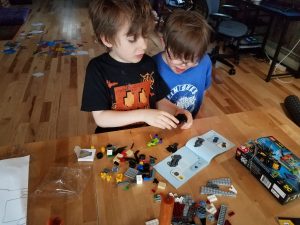

Our family is far from typical. The rules and structure I see among my friends’ and family’s families don’t work in our home. We’ve tried chore charts and reward systems and failed. We’ve set aside homework time and failed. We’ve always served a varied, healthy diet but food aversions mean we fail there too, and fall back on cereal. When the oldest sibling does not comply, expecting the younger siblings to, at least at these ages, is unrealistic.
My children have traded so much play time for trips to therapists and specialists. We’ve had to remove toys from our home because of Arlo’s tendency to throw things. Emil and Maya have waited in cars, in strollers, on a bench, at a restaurant, on the side of the road, in the middle of a trail while Arlo and I work through whatever he’s going through.
We avoid so many random things because it’s not safe for us. Play spaces that are too close to the road are too dangerous. Hikes near a body of water aren’t possible because Arlo will go right in. Going to a park to run around for 30 minutes isn’t feasible because getting Arlo to leave is impossible. Emil and Maya hide their toys because Arlo might destroy them.
Arlo’s siblings get it, until they don’t. They’re kids after all. Fairness is important to them. And they feel it when Arlo gets special treatment.
These past few weeks of self-quarantining at home have been particularly trying. The lack of structure has caused a surge in Arlo’s behaviors – aggression, elopement, obsession over certain songs and shows, throwing, hitting, meltdowns, screaming. It’s hard on all of us, especially his siblings. They roll with the punches, sometimes literally.
We talk openly about Down syndrome in our home. We explain how some things are harder for Arlo, that we need to have more patience. Empathy and understanding don’t come easily to the under 10 set. We can only watch Spiderman Into the Spider Verse so many times. Their tolerance is admirable.
We’re so busy telling those around us that our children are MORE ALIKE THAN DIFFERENT. This is true. But when it comes to our immediate family, to our children who are the siblings of our child with a disability, it is critical to talk about the different because we live it. It is OK to discuss disability. Disability is not a bad word. It is part of our lives. We deal with it every minute of every day. Pretending that disability isn’t part of our life is ignoring a critical part of our children’s existence.
We have to explain these differences to our children because thankfully they don’t see disability. They 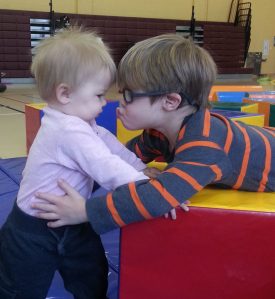

Arlo’s disability is why he has a hard time talking. It’s why school is so hard. It’s why our lives are so different from those around us. It’s also part of what makes him the amazing person he is. It’s why our entire family knows how to truly practice empathy. It’s why we have amazing friends. It’s why I am far better person than I was a decade ago. It’s part of what makes Emil and Maya good friends and caring classmates.
Witnessing the beauty of my children’s bond, that unconditional sibling love-hate relationship restores my faith in humanity.
And with that, I have to go referee – the screams of joy can turn into an all out brawl in seconds.