Lynne Fetter
[Content Note: This essay describes a suicide attempt. If you are currently experiencing suicidal thoughts, we strongly advise against reading this essay. If you are experiencing a mental health crisis, please dial 988 (Suicide and Crisis Lifeline) 911 (emergency services) or head to the nearest emergency room.]
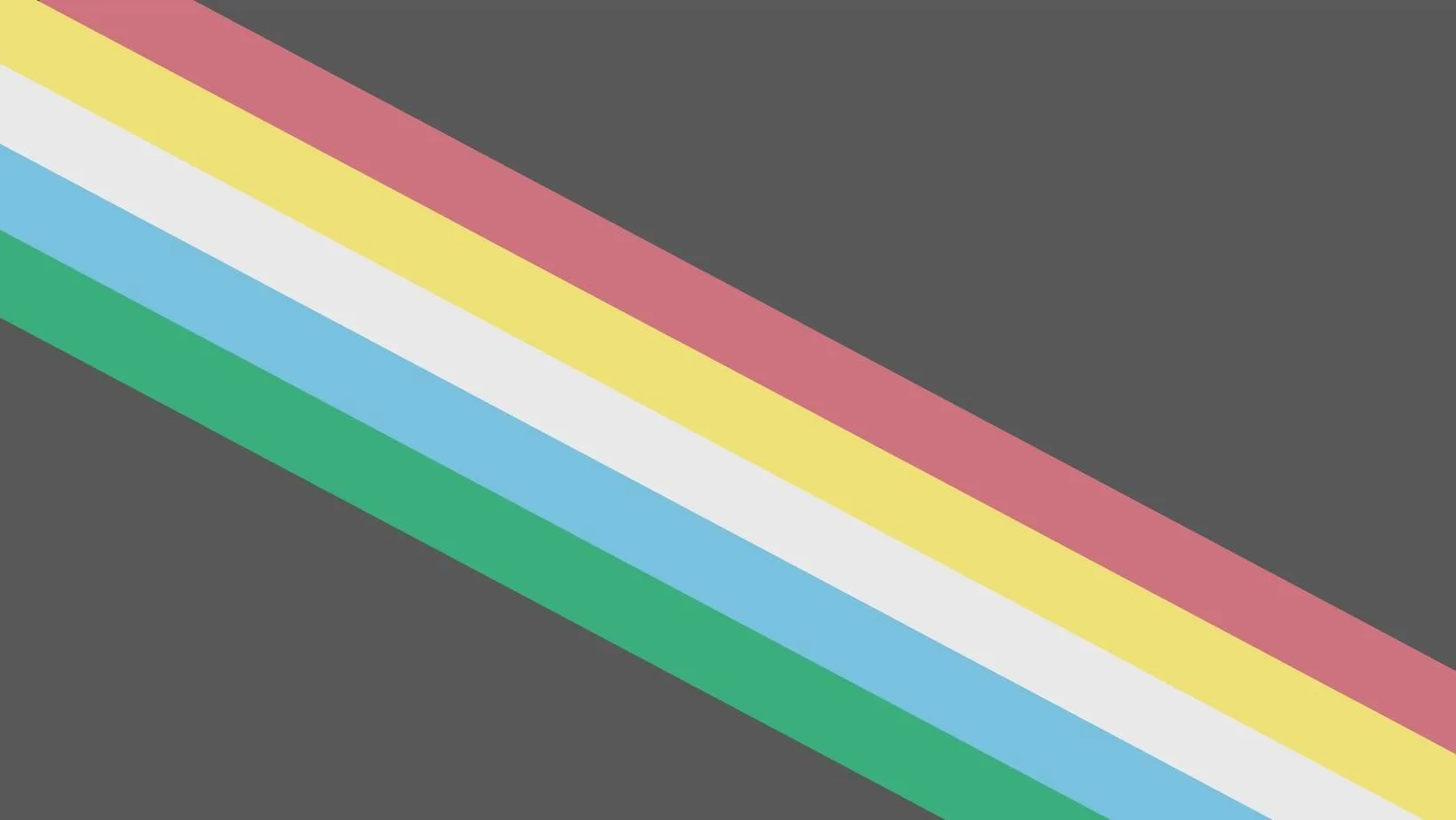
July is Disability Pride Month, and I intend to celebrate it.
I couldn’t always genuinely do that. I couldn’t always say it and mean it. But I have, over the years, come to understand what it means to me to have Disability Pride, why it is important, and why I should, in fact, publicly celebrate.
Disability is not an inherently bad thing. It can be a painfully difficult thing, yes; but it’s not bad. I am not broken, wrong, inferior, or less of a person for being disabled. My brain and body do give me a run for my money at times. I trip and fall more often than others, for reasons I do not entirely understand. Certain tasks take longer to learn. My moods can, unchecked, swing wildly from one end of the scale to the other – but I am no less human. Disability is a natural and important part of human diversity.
I did not always believe this. In the way that a capitalist, ableist society strongly encourages, I credited my worth not to the simple fact of my humanity but almost entirely to my productivity, to whether or not I thought I would be able to work and “contribute to society” (hint: I did not). In college and part of graduate school, I saw absolutely no future for myself -or at least, what I believed to be no future. However outlandishly unrealistic, given privileged upper-middle-class family support, I imagined myself on the streets with no money to my name. In my mind, my grim fate was sealed, and I figured I would rather die.
I don’t remember when or how I first heard the statistic that up to 80% of autistic people with college degrees are unemployed (I genuinely cannot find a scholarly citation). Wherever I heard it, whether it is true and methodologically sound or not, it took on a life of its own in my brain. It lodged itself in my subconscious in a way that no other statistic ever has or will again. I’ve heard similar stories from other autistic people. That number and others like it lurk in the closet, lying in wait to jump scare us when we least expect it.
On January 28th, 2019, that 80% was the last straw that jump scared me into a spiral of dissociation and despair after hearing it again in a graduate school class. That October, I had been pushed out of an internship at a local eviction diversion agency for performance issues related to unaccommodated autism – and my shame was deep. Sitting in class that January, I was a case example. I am the 80%, I thought. I don’t remember much else of what happened that day. I moved through the world a disembodied mind, trying in vain to, as I would describe in a journal the next day, “steer a body full of air.” The only coherent thought I remember was the 80%, the economic burden it represented, and the debt I believed I owed society for my existence. Somewhere in my brain, I decided it would be better if I just sacrificed myself now to spare the world the trouble.
And so, on a foggy, despairing impulse, I walked into a crosswalk as the red hand flashed, directly into busy traffic and the path of a bus. Needless to say, I am lucky the bus didn’t hit me. I am lucky to have come out of that act both unharmed and alive. Like many suicide attempters, I told no one the true story for years, fooling myself into counting it as an “accident” until I realized how common this kind of self-deception is among those who attempt suicide and how important it is to share the story, both to be honest about my own history and future risk of suicide; and to illustrate to the fullest extent why we should all care about Disability Pride.
We should care about Disability Pride because our very lives depend on it.
At some point, LGBTQ+ people started saying about LGBTQ+ Pride, “Pride is important because someone tonight still believes they’re better off dead than being themself.” Indeed, LGBTQ+ Pride is known to lower the risk of suicide attempt among LGBTQ+ youth.
Because Disability Pride is a more recent concept, the research on it as a protective factor against suicide attempts appears to be basically non-existent. But as a queer disabled person, I do imagine a parallel can be drawn: Disability Pride is important because someone out there still believes they’re better off dead than an economic burden on society.
Disability Pride is important because someone out there still believes they’re better off dead than an economic burden on society.
-Lynne Fetter
So I celebrate Disability Pride to push back hard against dominant narratives of disability as problem or defect and introduce to the world (and especially disabled youth) the following (and believe it or not, still quite radical) ideas:
- There is nothing inherently wrong with us – our bodies or minds. We are just fine exactly as we are.
- We are so much more than our productivity.
- Our disabilities do not diminish our humanity; we are no less human than anyone else.
- Though they can be difficult, our lives are no less worth living.
- Our voices and contributions as disabled people are important and even crucial.
- Our creative adaptations and solutions to the many barriers we face make the world a better place for everyone.
- Our collective disabled history is important.
- Our needs are not “special,” but rather, human, and should be honored as such.
- We, too, deserve human flourishing.
This Disability Pride Month, please join me in boldly proclaiming these radical truths. Our lives depend on it.
—
Lynne Fetter is a disability advocate living and working in Richmond, Virginia. For fun, Lynne enjoys reading, writing, exploring the local community with friends, and petting dogs. Lynne is a former Partnership for People with Disabilities intern.
Virginia Commonwealth University is a nationally renowned public research institution dedicated to the success and well-being of all members of its community. VCU student, faculty and staff groups and associations are open without regard to any characteristic or identity protected by law.